
Most service business websites do not generate leads because they are built as brochures. A brochure website proves the business exists and gives a visitor one thing to do: get in touch today. A lead generation website is built differently. It gives a ready buyer a clear way to start, gives everyone else a reason to stay in touch, and gives past customers a next step.
DMG Online Marketing has worked in marketing since 1998, from Calgary, and has designed and built more than 100 websites. We work with service businesses across North America. This article sets out a three-question test you can run on your own site, and what to fix first.
The Brochure Problem
A brochure website has a familiar shape: home, about, services, contact. It answers one question well, which is whether the business is real. That matters. A buyer who was referred to you will check the site before they call.
The weakness is what it asks of a visitor. Every page leads to the same request: get in touch. That suits the person who is ready to hire this week. It offers nothing to the person who is comparing options, planning for next quarter, or reading about a problem for the first time.
A brochure site lets that second group leave without a trace. You do not know who they were, and you have no way to reach them again.
When a website is not generating leads, owners often read it as a traffic problem. “I just need more leads” becomes a request for more visitors. More visitors to a brochure produces more people who leave. The site has to give them something to do first.
The Three-Question Website Test
Open your website as a stranger would and answer three questions. Write the answers down.
1. What can someone buy from you today, from your website?
For a service business, buying usually means booking: an estimate, a consultation, a first visit. The test is whether that step is specific, visible on every page, and clear about what happens next. A general form with an empty message box does not pass. A named step does: “Request an estimate. We reply with available times.”
2. What can someone who is not ready take for free, in exchange for staying in touch?
This is the question most service business websites cannot answer. The visitor who is three months from a decision needs a smaller step: a checklist, a pricing guide, a seasonal reminder, a newsletter worth reading. They get something useful. You get an email address and permission to follow up.
3. What would you sell next to someone who has already bought?
A past customer is the easiest person to serve again. The site should show them how: a maintenance plan, a second service, a referral offer. If the next step exists only in the owner’s head, it does not exist for the customer.
Any question without an answer is the next thing to build. Build one, not three, and only offer what the business already delivers well.
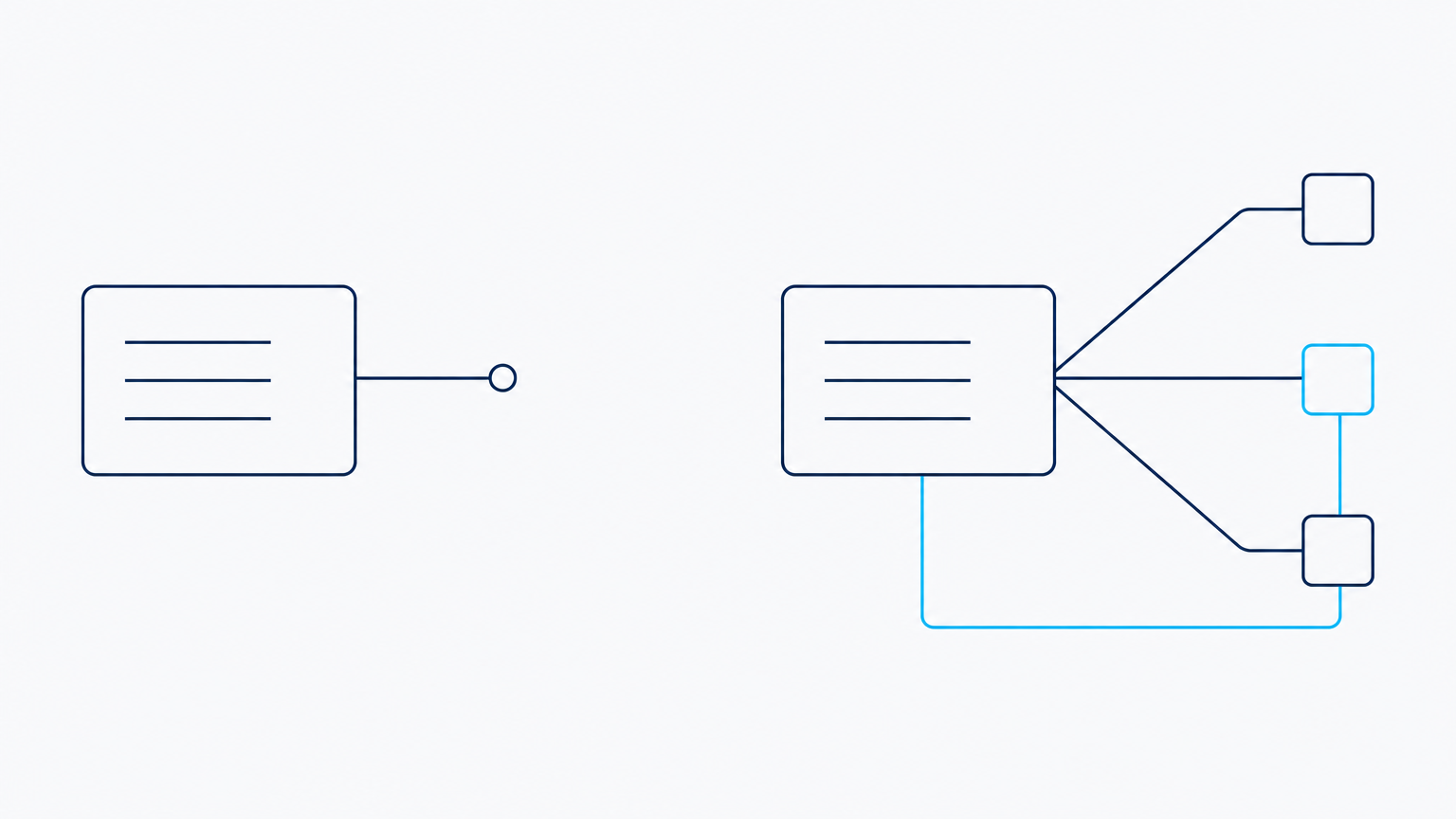
The Homepage Is the Hallway
A homepage has to serve every visitor at once. Its job is to show the business is legitimate and point each person to the right room. It is rarely the best converting page on a site, and it should not be asked to be.
The converting happens on single-purpose pages: one service or one offer, one audience, one action. Someone who searched for a specific service should land on the page for that service, read about their problem in their own words, and see one clear step. DMG calls this conversion architecture: a website that turns visitors into leads by design.
The same holds when the introduction comes from somewhere else. Whether a buyer hears about you through a referral, a search result, or an AI answer, the website is where they check before they call.
The difference between a brochure and a lead generating website comes down to six things.
| Brochure website | Lead generation website | |
|---|---|---|
| What it proves | The business exists | The business exists, and what to do next |
| For a ready buyer | A general contact form | A specific first step on every page |
| For a visitor who is not ready | Nothing | A useful free step and a way to stay in touch |
| For a past customer | Nothing | A clear next service or plan |
| Where converting happens | The homepage, by default | Single-purpose pages, one per service or offer |
| After the visit | No record and no follow-up | A list you own and a follow-up system |
Most Visitors Need a Reason to Come Back
A free step only works if something follows it. When a visitor downloads the checklist or joins the list, the next few weeks should be planned: two or three useful emails, then one clear invitation to book.
It does not need to be elaborate. It needs to run without the owner remembering to send it.
There is a second reason to build it. Search engines, social platforms, and ads bring people to you, but the audience on each one belongs to the platform. Your website and your list are the parts you own. A business running on referrals has the same exposure in a different form: the flow depends on someone else.
What This Looks Like in Practice
A high-ticket coaching business had website traffic and a contact form that let every inquiry through. One call to action served every type of visitor. Every inquiry received the same confirmation, and there was no nurture path for qualified leads. Before the rebuild, 8% of booked discovery calls were a fit.
DMG rebuilt the site, built a strategy-call page that qualifies an inquiry before it reaches the calendar, and set up automated email for both qualified and unqualified inquiries. In about six months, the share of booked calls that were a fit rose from 8% to 87%. The full account is in the coaching case study.
That is one business and one result, not a forecast. It shows what changes when a site gives each visitor a defined path.
What to Fix First
- Run the test. Write down the answer to each question. An honest “nothing” is useful.
- Make the first step specific. One primary action, on every page, with a plain statement of what happens next.
- Give each core service its own page. One service, one audience, one action. If the current site cannot support this without a rebuild, that is a website infrastructure decision.
- Add one free step, with follow-up. Choose the one your buyers would actually want. Plan the emails before you publish it.
- Measure by page. Count inquiries from each page, not only total visits.
Do these in order. More traffic comes after, when the site has something to do with it.
Frequently Asked Questions
Why is my website not generating leads?
The most common reason is structure, not traffic. The site proves the business exists but offers one generic step, usually a contact form, that only suits a visitor ready to hire today. Visitors who are still comparing or planning have nothing to do, so they leave and cannot be reached again.
What is a lead generation website?
A lead generation website is a site built to turn visitors into inquiries and contacts, not only to describe the business. It gives a ready buyer a specific first step, offers something useful to visitors who are not ready in exchange for staying in touch, and follows up with them automatically.
Do I need a new website to generate more leads?
Not always. If the site is fast, easy to edit, and can hold a dedicated page for each service, the fix is often new pages and a follow-up system on the existing foundation. A rebuild makes sense when the structure of the current site prevents that work.
Should my homepage be my best converting page?
No. A homepage serves every visitor at once, so its job is to establish credibility and direct people to the right page. Pages built for one service or one offer, with one action, usually convert better because they speak to one buyer about one problem.
What should a service business offer visitors who are not ready to buy?
Something useful that relates to the service and costs little to produce: a checklist, a pricing guide, a seasonal reminder, or a newsletter. The visitor trades an email address for it. What matters is that a planned follow-up exists, so the new contact leads somewhere.
The Next Step
DMG Online Marketing works with a deliberately limited number of service businesses, typically between $1M and $5M in revenue, on twelve-month engagements. For a direct read on what your website gives a visitor to do, and what we would build first, Book a Strategy Call. If you are not sure the fit is right, See If We’re a Fit.