
AI search visibility is how often, and how accurately, your business appears when someone asks an AI system for a recommendation. That includes Google’s AI Overviews and AI Mode, ChatGPT, and Perplexity. For a service business it rests on the same foundation as search rankings: a clear website, consistent business details, credible proof, and content that answers real questions directly.
DMG Online Marketing has worked in marketing since 1998, from Calgary, with service businesses across North America. This guide is for the owner who wants to know what has changed, what has not, and where to put effort first.
What Changed in How Buyers Search
For twenty years a buyer typed a query, got a list of links, and chose one. Your job was to be near the top of that list.
That model still exists. It is no longer the only one. Google launched AI Overviews in the United States in May 2024: a written answer above the regular results that names a handful of sources. ChatGPT added live web search in October 2024. Google’s AI Mode, which replaces the results page with a conversation, opened to all US users in May 2025.
Three things follow.
- The buyer gets an answer before a list. Many questions end there, without a click.
- Fewer businesses are named. A results page shows ten links. An AI answer may mention three companies, or one.
- The question is longer. Buyers ask in full sentences and add their location, timeline, and the problem they are trying to solve.
Being findable is no longer enough. You need to be a source an AI system is willing to repeat.
What AI Systems Draw On When They Recommend a Business
Nobody outside these companies can see the full method. What can be observed is consistent enough to act on.
- Pages they can read. Slow, blocked, or script-dependent pages are harder to use as a source. This is a website infrastructure question before it is a content question.
- Pages that state the answer plainly. What you do, for whom, and where, in the first few sentences.
- Agreement across the web. Your name, address, phone number, services, and service area should match on your website, your Google Business Profile, and the directories that list you. Disagreement reads as doubt. This is the core of local SEO.
- Evidence that others vouch for you. Reviews, mentions on other sites, case studies with real figures, and a named, accountable person behind the business.
Depth matters too. One thin page about a service is a weaker source than a full service page with supporting articles that answer what buyers actually ask. That is the purpose of content built to earn authority.
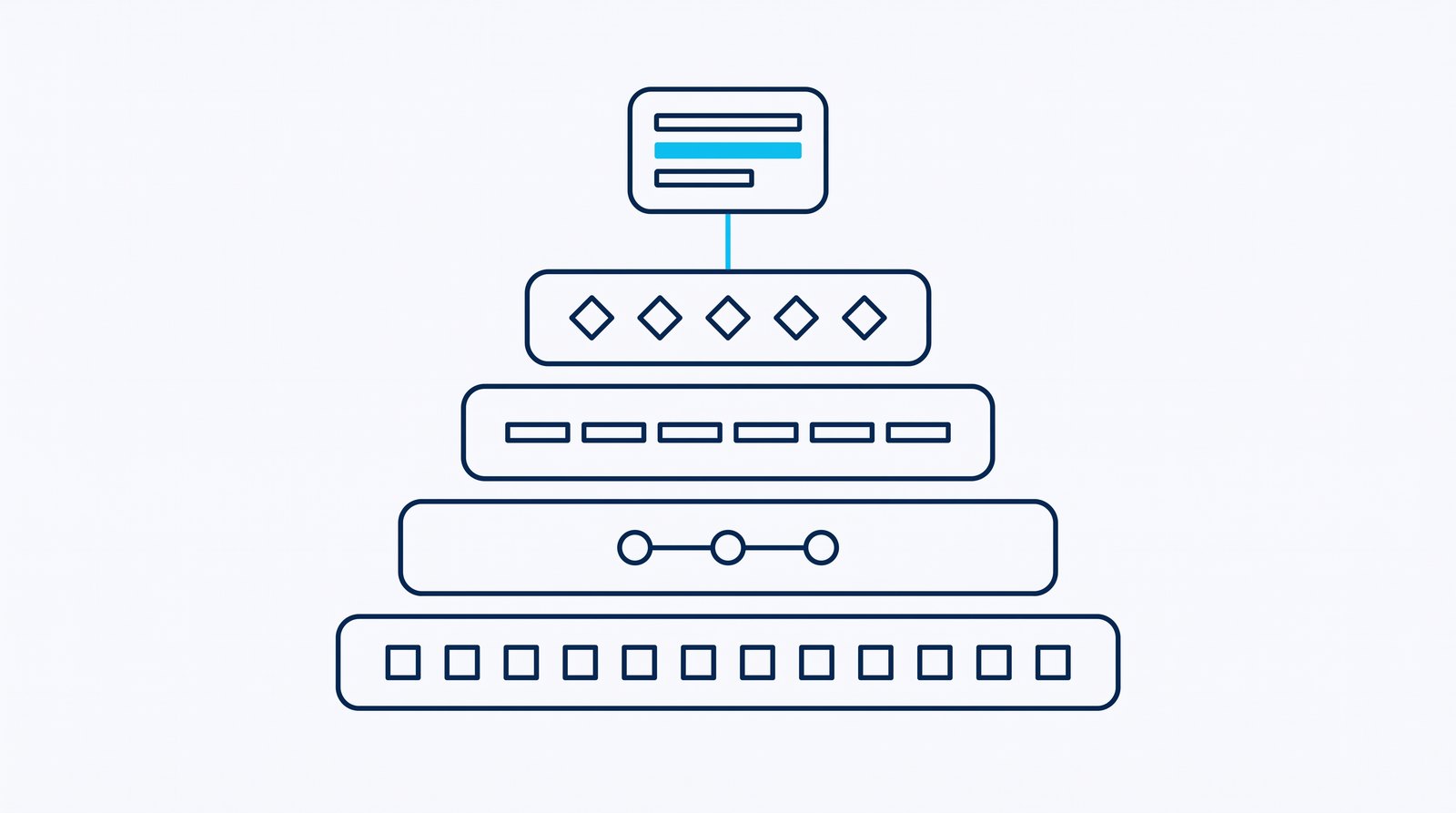
The Foundation Has Not Changed
AI systems are, in large part, reading the same web that search engines index. A business that is invisible in search is rarely visible in AI answers. A business with a strong search foundation has most of the work done.
That is why DMG treats SEO and AI visibility as one system. SEO is the foundation. AI visibility is its extension.
You will see this sold as AI search optimization, generative engine optimization (GEO), or answer engine optimization (AEO). All three describe one idea: making your business easy for an AI system to find, understand, and cite. None replaces a sound website and search presence. If someone offers to sell you one without asking about the other, that is worth noticing.
| Traditional search | AI answers | |
|---|---|---|
| What the buyer sees | A ranked list of links | A written answer naming a few sources |
| What you compete for | A position on the page | Being one of the sources named |
| What earns it | Relevance, technical health, authority | The same, plus quotable answers and consistent facts |
| How you measure it | Rankings, clicks, leads | Mentions across a fixed set of questions, plus leads |
What AI Search Optimization Adds: Being Quotable
An AI system does not rank your page. It lifts a passage from it, so the passage has to stand on its own.
Answer first. Under each heading, put the direct answer in the first two or three sentences.
State facts with units and dates. “We have served Calgary since 1998” can be repeated. “We have been around a long time” cannot.
Use real questions as FAQ entries. Take them from sales calls and emails. Answer each in forty to sixty words.
Label the page for machines. Schema markup is a set of labels in your site’s code that states what the business is, where it operates, and what a page contains. It does not make weak content strong. It removes doubt about content that is already sound.
A Ten-Minute Check You Can Run Today
- Write down five questions a good prospect would ask before hiring a business like yours. Put your city or service area in at least three.
- Ask each one in Google, ChatGPT, and Perplexity.
- For each answer, record three things: were you mentioned, were your details correct, and who was named instead.
- Open the sources the answers cite. Note what those pages do that yours do not.
If you are absent everywhere, the gap is usually the foundation. If you are mentioned but the details are wrong, the gap is consistency, and it is the faster one to close. Keep the list. The same five questions, asked again in ninety days, are your first measurement.
What to Fix First
- Access. Confirm search engines and AI crawlers can reach and read your key pages.
- Identity. Make your business name, location, services, and service area identical everywhere.
- Service pages. Open each with what you do, for whom, and where. Add a short FAQ built from real questions.
- Proof. Publish what you can stand behind: reviews, named results, the person accountable for the work.
- Depth. Add supporting articles around each service, each answering one question properly.
- Measurement. Track a fixed set of questions on a schedule, alongside leads.
Most businesses want to start at step five. The earlier steps matter more.
What No One Can Promise
AI answers vary. The same question asked twice can name different businesses, and none of these systems publish a rulebook. An agency that promises a business will be named is selling certainty it does not have.
What can be done is to raise the odds and measure honestly. DMG’s published car detailing case study shows what the foundation produces in search: organic traffic up 167 percent and monthly search leads from 22 to 69 over six months. That is search evidence, not AI evidence. We would rather show a real result with its limits than an impressive one without them.
Frequently Asked Questions
What is AI search visibility?
AI search visibility is how often and how accurately your business appears in answers written by AI systems such as Google’s AI Overviews, ChatGPT, and Perplexity. It covers two things: being mentioned or cited as a source, and having your services, location, and details described correctly when you are.
Is AI search visibility different from SEO?
It is an extension of SEO, not a replacement. AI systems largely read the same web that search engines index, so a sound website, consistent business details, and credible content remain the base. What changes is the standard for each page: answers must be direct, specific, and able to stand alone when quoted.
Do I need a separate agency for generative engine optimization?
Usually not. Generative engine optimization depends on the same technical health, content quality, and reputation signals as SEO. Splitting them between two providers tends to produce conflicting priorities. A better test is whether one partner can explain how search and AI visibility connect, and show how both will be measured.
How do I check whether my business shows up in ChatGPT?
Write five questions a good prospect would ask, including your city or service area. Ask each in ChatGPT, Perplexity, and Google. Record whether you are mentioned, whether your details are correct, and who is named instead. Repeat with the same questions in ninety days to see whether anything has moved.
How long does it take to improve AI search visibility?
It depends on the starting point. Correcting inconsistent business details can show up within weeks. Building the depth of content and reputation that makes a business a preferred source takes months, in the same way search authority does. Any timeline should be tied to a measured baseline, not a general promise.
The Next Step
DMG Online Marketing works with a deliberately limited number of service businesses, typically between $1M and $5M in revenue, on twelve-month engagements. For a direct read on where your business stands in search and in AI answers, and what we would do first, Book a Strategy Call. If you are not sure the fit is right, See If We’re a Fit.