
AI assistants such as ChatGPT, Google’s AI Mode, and Perplexity recommend the businesses they find described clearly and consistently across the web: on the business’s own website, in reviews, on profiles and directories, and on other sites. An AI answer names a few businesses, not ten links. The buyer then checks the website of each one before they call.
DMG Online Marketing has worked in marketing since 1998, from Calgary, with service businesses across North America. This article explains what these systems draw on, what the research shows, and how to get ChatGPT to recommend your business more often.
An AI Answer Works Like a Referral
Ask a search engine for a commercial roofer and you get a page of options. Ask an AI assistant and you get something closer to a referral from a well-read friend: two or three names, a sentence on each, and a few sources.
That changes what a business competes for. On a results page, position five still gets seen. In an AI answer, a business is named or it is absent.
The assistant has no experience of your work. It builds its answer from two sources.
- What the model learned in training. What was written about your business on the public web up to a cutoff date.
- What it finds at the moment of the question. Most assistants now run a live web search and read the pages that come back.
In both cases the raw material is the same: what the web says about you, and how consistently it says it.
What the Research Shows About Mentions
In May 2025, Ahrefs published an analysis of 75,000 brands and how often each appeared in Google’s AI Overviews. Of the factors it measured, the one most closely tied to appearing was how often the brand name was mentioned across the web, with a correlation of 0.664. The number of backlinks, long the main currency of SEO, came in at 0.218.
Two limits apply. The study covers Google’s AI Overviews, not ChatGPT or other assistants. And as its author states, correlation is not causation: well-known brands are mentioned more and recommended more, and the study cannot say which causes which.
The practical reading is still useful. Links to your site matter less on their own than whether your business is talked about, by name, in the places an AI system reads.
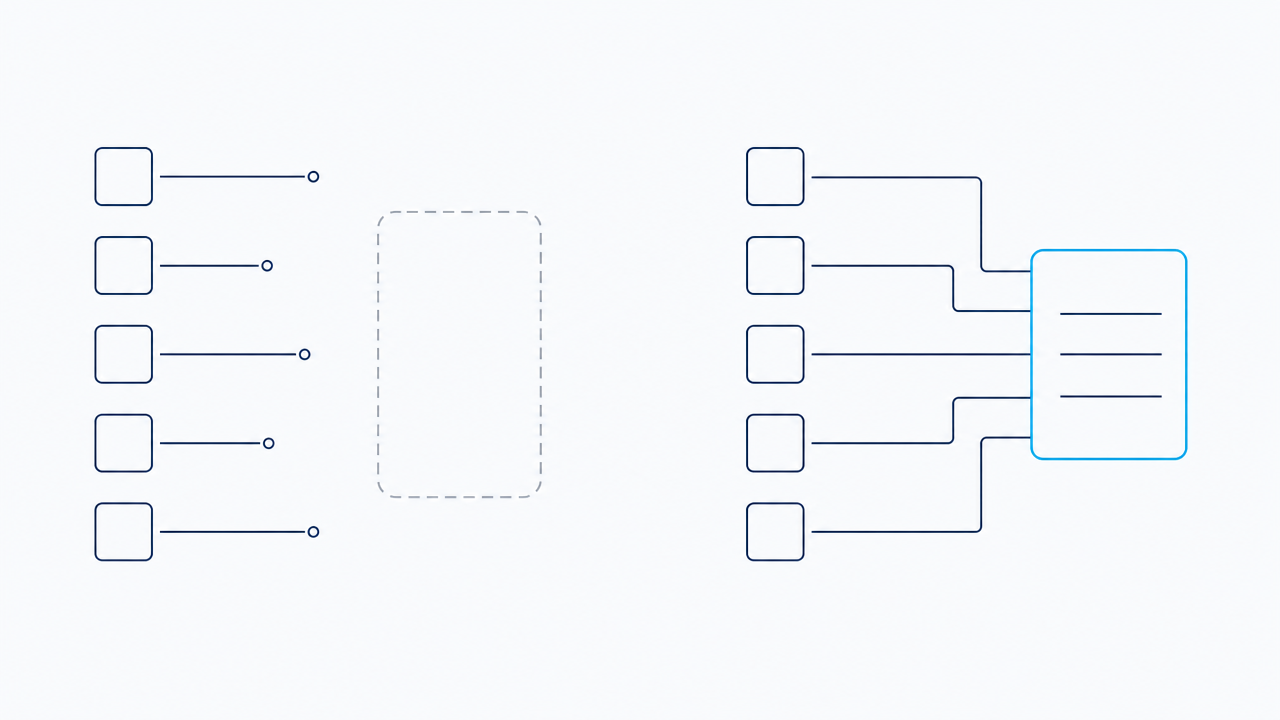
Where the Web’s Description of You Comes From
For a service business, that description is assembled from a short list of places.
| Source | What an AI system can learn from it |
|---|---|
| Your website | What you do, for whom, and where, in your own words |
| Google Business Profile and directories | Name, address, phone, category, service area |
| Reviews | What customers say you did, in their words |
| Other websites | Associations, local press, suppliers, partners |
| Video and social profiles | Your name attached to your subject, in another format |
Consistency ties them together. If your website says one thing, your Google Business Profile another, and an old directory listing a third, the assistant has three weak descriptions in place of one strong one. Making sure Google knows who you are is the core of local SEO, and the same work pays off here.
The Ahrefs study counted mentions of a brand name anywhere on the web, linked or not. A named reference in a local news story, an association’s member list, or a customer’s review adds to the picture.
Answer the Questions Buyers Actually Ask
Buyers ask an assistant full questions: who handles commercial roof repairs in Calgary, what a kitchen renovation involves, how to choose between two kinds of contractor. The assistant looks for pages that answer that question directly.
Your sales calls and inbox already hold the list. Write down what prospects ask before they hire you, and answer each question in public.
- On the service page it belongs to, in a short FAQ.
- In an article that covers one question properly.
- In a short video or a LinkedIn post, in the same words.
Put the answer in the first two or three sentences, with specifics: places, timelines, what is included. An assistant can use a passage that stands on its own. It cannot use a page that circles the question.
This is the purpose of content built to earn authority. Our guide to AI search visibility covers the page-level detail.
The Recommendation Is Checked on Your Website
An AI answer introduces a business. It does not close the sale. A buyer about to spend real money opens the website of each business named and decides there.
The website has to hold up to that visit.
- It confirms what the assistant said. The same services, locations, and details, stated plainly.
- It shows proof. Reviews, results with real figures, and a named person accountable for the work.
- It gives a clear first step. One specific action, visible on every page.
- It gives a visitor who is not ready a reason to stay in touch.
A recommendation that lands on a thin or dated site is wasted. A website that turns visitors into leads matters as much as being named in the first place.
What to Do First
- Ask the assistants. Put five questions a good prospect would ask to ChatGPT, Google, and Perplexity. Record who is named and what is said about you.
- Fix the description. Make your name, services, and service area identical on your website, your Google Business Profile, and every directory that lists you.
- Earn mentions you can stand behind. Ask satisfied customers for reviews. Get listed by the associations you belong to. Contribute to local and industry publications.
- Publish the answers. One buyer question at a time, on your own site first.
- Check the website a recommendation leads to. Read it as a stranger who was just given your name.
- Measure on a schedule. Ask the same five questions every ninety days.
An owner can start the first two steps this week. When the rest is more than you can carry alongside the business, it is the work DMG delivers as AI search optimization.
What No One Can Promise
AI answers vary. The same question asked twice can name different businesses, and none of these systems publish their rules. Anyone who promises that an assistant will name your business is selling certainty they do not have.
What a business can do is become easier to find, easier to describe, and easier to trust, then measure honestly whether the answers change.
Frequently Asked Questions
How do AI assistants decide which businesses to recommend?
They build an answer from what the public web says about businesses in that category and place: websites, reviews, profiles, directories, and mentions on other sites. Businesses described clearly and consistently across many sources, with pages that answer the buyer’s question directly, are more likely to be named. None of the companies publish exact rules.
How do I get ChatGPT to recommend my business?
There is no setting to switch on, and no one can promise it. What raises the odds is being described the same way everywhere, being mentioned by name on sites other than your own, earning recent reviews, and publishing direct answers to the questions buyers ask. Then check the answers every ninety days.
Do backlinks still matter for AI recommendations?
They matter, but less on their own than they once did. In a 2025 Ahrefs study of 75,000 brands, mentions of the brand name across the web were more closely tied to appearing in Google’s AI Overviews than the number of backlinks. A link from a relevant site is still worth earning.
Does my website still matter if AI answers the question?
Yes. An AI answer introduces a business, and the buyer still checks the website before calling or paying. The site also supplies much of what an assistant knows about you. If it is unclear, out of date, or gives a visitor nothing to do, the recommendation leads nowhere.
How long does it take to show up in ChatGPT answers?
It depends on the starting point. Corrected business details and new reviews can be picked up within weeks by assistants that search the live web. Mentions on other sites and a body of useful answers take months to build. Measure against a fixed set of questions, not a general impression.
The Next Step
DMG Online Marketing works with a deliberately limited number of service businesses, typically between $1M and $5M in revenue, on twelve-month engagements. For a direct read on what AI assistants say about your business today, and what we would fix first, Book a Strategy Call. If you are not sure the fit is right, See If We’re a Fit.